In a business environment where digital transformation is imperative, organizations seeking to scale their operations face growing challenges related to IT operational efficiency.
Often, the IT team finds itself overwhelmed with resolving incidents and routine operational tasks, hindering the implementation of essential strategic actions for growth.
In this context, the implementation of a Command Center – also known as Network Operations Center – becomes crucial for optimizing processes and ensuring business continuity.
The Challenge of Operational Incidents
In various organizations, it's common to find that the IT department dedicates a significant portion of its time to fixing incidents after problems occur. Market studies and data indicate that:
- Up to 60% of time IT professionals can be consumed by resolving failures that are only identified after they occur.
- The lack of real-time monitoring compromises agility in incident detection and response, resulting in delays and financial losses.
- Operational overload prevents the team from dedicating itself to strategic planning and projects, which are fundamental for innovation and competitive differentiation.
These data reveal a scenario where operational inefficiency not only raises costs but also diminishes IT's ability to contribute to scalable business growth.
The Role of the Command Center/NOC
The implementation of a IT Command Center emerges as an innovative and strategic solution, providing benefits that go beyond simple risk mitigation. Among the main aspects, the following stand out:
- Real-Time Monitoring
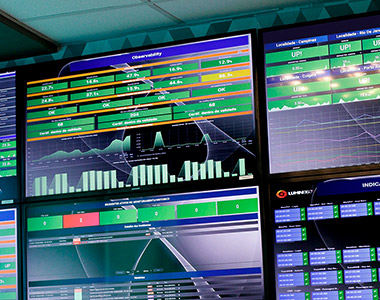
Centralized monitoring allows for immediate detection of infrastructure anomalies, enabling proactive responses before incidents escalate. This continuous control eliminates reliance on late alerts, which often trigger reactive and costly processes. - Productivity Increase
With an automated and integrated operational environment, the IT team can focus efforts on strategic initiatives such as process optimization, technological innovation, and support for projects that drive business growth. - Reduction of Operational Bottlenecks
The centralization and standardization of operational processes minimize recurring failures and avoid duplication of efforts, allowing for more efficient resource management and better operational performance metrics. - Improvement in Strategic Decision-Making:
The systematic collection and analysis of data from the entire IT infrastructure offers valuable insights for C-levels, executives, and managers, facilitating the identification of opportunities and the definition of investment strategies aligned with market needs.
Lumini's IT Command Center
In large businesses, where agility and efficiency are cornerstones for competitiveness, the transformation of the IT area involves the adoption of modern and integrated management models.
The IT Command Center is a key piece for overcoming operational bottlenecks and directing team efforts towards initiatives that truly drive scalable company growth.
By investing in proactive monitoring and process automation, organizations ensure not only operational continuity but also the ability to innovate and stand out in an increasingly demanding market.
The Lumini IT Solutions Command Center offers 24x7 predictive monitoring and management for critical IT environments, with a total business focus.
✅ Continuous monitoring of servers, networks, and data centers
✅ Proactive incident detection and resolution
✅ Unplanned downtime prevention